What to Wear to an Interview in NYC When You Want to Stand Out
What to wear to an interview can feel surprisingly difficult when you want to look polished, confident, and memorable without appearing distracting or overdressed.
In New York City, your choice may also need to work for a walk across Manhattan, a change in weather, and an interview setting that is more formal, or more relaxed, than expected.
The right interview outfit for women depends on the role, workplace, season, format, and your own comfort. This guide explains how to choose clothing, shoes, colors, accessories, and Zoom interview attire so your appearance supports the impression you want to make.
What to Wear to an Interview in NYC: Start With the Workplace
The strongest interview outfit begins with context. Before deciding what to wear, consider the company’s industry, the role itself, the seniority of the position, and whether you will meet one person or a larger panel.
A financial-services interview, a design studio interview, and a nonprofit meeting may all call for professionalism, but they may communicate it through different levels of structure.
In Manhattan, the practical details matter, too. You may be commuting by subway, walking several blocks, carrying a portfolio or laptop, or moving from a chilly street into a warm office.
An outfit that looks polished in a mirror but becomes uncomfortable after thirty minutes of walking is not a successful interview outfit.
Match the Outfit to the Role, Not Just the Office
For a traditional corporate or client-facing role, tailored clothing usually provides the safest starting point. That could mean a suit, a structured blazer with trousers, or a polished dress with a refined jacket.
The goal is not to look severe. It is to show that you understand the level of formality the role requires. Preparation makes what to wear to an interview easier because it reduces last-minute outfit changes.
For a business-casual environment, try tailored separates rather than defaulting to jeans or overly relaxed knitwear. A fine-gauge sweater with trousers, a simple blouse with a structured jacket, or a polished midi dress can feel professional without looking rigid.
Creative workplaces allow more personality, but “creative” does not mean anything goes. You can introduce individuality through a distinctive jacket, an interesting texture, refined color, or modern jewelry while keeping the overall look intentional. The question is whether the outfit looks considered and appropriate, not whether every piece is conservative.
How NYC Logistics Affect Your Interview Look
Plan the complete journey, not only the meeting. If you are walking from a subway station, choose shoes that are stable and comfortable enough for the route.
If the weather is wet or cold, wear practical outerwear and carry a compact umbrella rather than allowing a soaked hem or damaged shoes to undermine your confidence. In NYC, the commute is part of deciding what to wear to an interview, not an afterthought.
A polished tote or structured work bag can hold your essentials without looking overfilled. If you need commuting shoes, change before entering the building and make sure the interview shoes are easy to carry without becoming creased or scuffed.
When It Is Better to Be Slightly More Formal
When the dress code is unclear, being slightly more formal is usually easier to manage than being noticeably too casual.
You can soften a formal look by removing a jacket, choosing a less structured blouse, or wearing refined flats. It is harder to make visibly casual clothing feel more professional at the last minute.
Research photographs of the workplace and notice how employees dress, but do not copy one person’s outfit exactly. Your role, interview stage, and responsibilities may call for a different level of polish.
At Pooja Goradia, this kind of context, how your wardrobe needs to function in your actual life, is central to making clothing decisions feel more straightforward. Comfort and fit are central to what to wear to an interview because they affect how naturally you move.
Interview Outfit Women Can Rely On: Build the Look Around Fit
A reliable interview outfit for women does not have to be new, expensive, or highly fashionable.
It needs to fit well, allow you to move naturally, and support the kind of presence you want to bring into the room. Clothing that requires constant adjusting can quietly pull your attention away from the conversation.
Start with one anchor piece. That might be a blazer, a pair of trousers, a dress, or a refined knit jacket. Build around it with pieces that have compatible structure and color.
This prevents the common last-minute problem of combining several items that look good separately but feel disconnected together. A full try-on makes what to wear to an interview easier to judge before the pressure of interview day.
Reliable Outfit Formulas for Different Workplaces
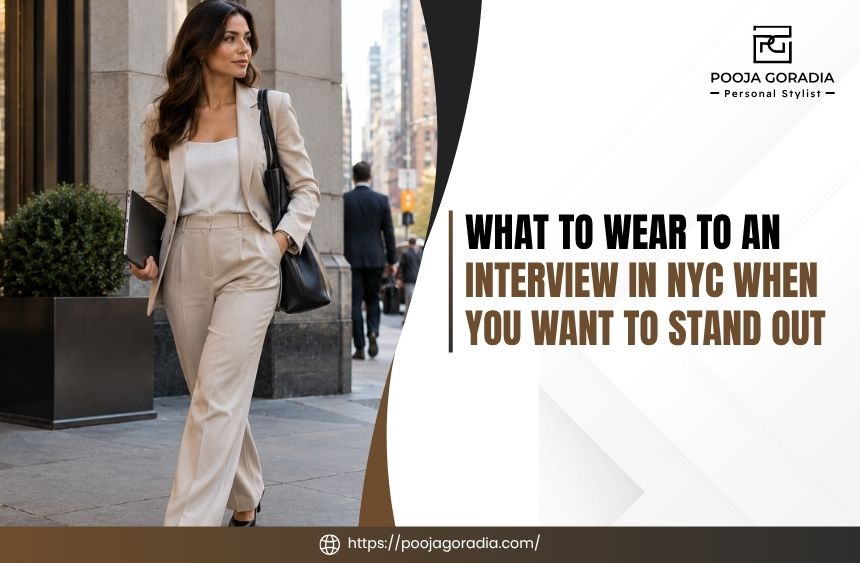
For a formal corporate interview, consider a matching suit or a tailored blazer with coordinating trousers or a knee- to midi-length skirt. A simple shell or blouse underneath keeps the outfit clean and allows you to remove the jacket if the room is warm.
For business casual, tailored trousers with a blouse and cardigan can work well, as can a polished dress with a structured jacket.
A fine-knit top may be appropriate when it is substantial, neat, and free from pilling. Avoid clothing that looks like weekend loungewear, even if the workplace itself is relaxed.
For a creative or less traditional role, use a familiar professional base and add one intentional point of personality. This could be a sculptural earring, a textured jacket, a subtle print, or an unusual but controlled color combination.
One clear choice is usually more effective than several competing statements. The best answer to what to wear to an interview supports your communication instead of competing with it.
If you are changing industries or returning to work, focus on clothes that help you feel like yourself at your most composed. You do not need to dress as a different person to look credible. You need a wardrobe that connects your personal style with the expectations of the opportunity.
Fit, Proportion, and Comfort Checks
Fit is not the same as wearing tight clothing. A well-fitting garment allows comfortable movement while maintaining a clean line.
Check whether the blazer pulls across the buttons, whether the trousers drag at the hem, whether a skirt rides up when you sit, and whether the neckline shifts when you lean forward.
Sit, stand, reach for a bag, and walk in the full outfit before interview day. Look for sleeves that catch on a desk, waistbands that dig in, slippery shoes, and fabrics that wrinkle immediately.
These details may seem small, but they affect how freely you communicate. Comfort and fit are central to what to wear to an interview because they affect how naturally you move.
The most useful alterations are often simple: adjusting a hem, shortening a sleeve, replacing a button, or refining the waist. If a garment is technically your size but consistently makes you feel uncomfortable, it may not be the right interview piece.
What to Wear When You Are Unsure of the Dress Code
Choose a polished middle ground: tailored trousers or a simple dress, a refined top, and a jacket that gives the look structure. Keep the colors coordinated, the shoes in excellent condition, and the accessories restrained. This approach can adapt to many office environments without appearing generic.
Try on the complete outfit at least one day in advance. A quick closet review can reveal that you already own the right pieces but have never combined them this way.

Interview Shoes Women Should Choose for Polish and Practicality
Interview shoes for women should be evaluated as part of the outfit and as equipment for the day. The most beautiful pair is not the best choice if it causes pain, slips on wet pavement, or makes you walk differently. Confidence is easier to access when your shoes feel secure.
Classic pumps, polished loafers, refined flats, low block heels, and streamlined ankle boots can all work, depending on the workplace and season. The deciding factors are condition, comfort, proportion, and formality.
Choosing the Right Heel Height and Shape
A low or medium block heel often offers stability without sacrificing polish. A pointed or almond-toe flat can look refined when its shape is clean and the shoe is in good condition.
Loafers work especially well with tailored trousers and can create a modern, professional impression in business-casual settings. When deciding what to wear to an interview, this practical detail matters as much as the clothing itself.
If you choose a higher heel, confirm that you can walk naturally and sit comfortably. Avoid shoes that require you to focus on balance or that create a loud, unsteady sound on hard floors.
The aim is not to prove that you can tolerate discomfort; it is to arrive composed. In NYC, the commute is part of deciding what to wear to an interview, not an afterthought.
The shoe should also relate to the clothing’s visual weight. A delicate flat may look out of proportion with a very structured suit, while a heavy boot may overwhelm a lightweight dress.
Looking at the full silhouette helps you make a more balanced choice. Season and weather can influence what to wear to an interview without changing the required level of professionalism.
Shoes for NYC Commuting and Weather
Wear weather-appropriate shoes during the commute if needed, but change before the interview. Keep the interview pair protected in a shoe bag and check the soles, heels, and uppers before leaving home.
Salt stains, worn heel tips, and visible creasing can make an otherwise strong outfit look unfinished. Comfort and fit are central to what to wear to an interview because they affect how naturally you move.
Break in new shoes well before the interview. Walk indoors, test them on stairs, and notice whether they rub at the heel or pinch across the toes.
Bring discreet blister protection if you are prone to discomfort, but do not rely on it to rescue a pair that is fundamentally unsuitable. Season and weather can influence what to wear to an interview without changing the required level of professionalism.
In winter, polished ankle boots may be more practical than pumps, especially for a long commute. In warmer months, choose breathable materials and make sure the shoes still feel formal enough for the workplace.
Open-toe styles can be appropriate in some offices but may be less versatile when the dress code is unknown. The workplace context should guide what to wear to an interview more than a generic dress-code rule.
What Color to Wear to an Interview and How to Use Accessories
When deciding what color to wear to an interview, begin with the impression you want your clothing to support rather than treating color as a strict formula.
Navy, charcoal, gray, black, cream, and muted neutrals are dependable because they are easy to coordinate and keep attention near your face. A polished middle ground can simplify what to wear to an interview when the office dress code is unclear.
A restrained accent color can add personality. A muted blue blouse, deep burgundy shoe, soft green knit, or subtle pattern may be suitable when it works with the workplace and the rest of the outfit.
The color should feel intentional, not like a distraction you keep noticing during the conversation. A full try-on makes what to wear to an interview easier to judge before the pressure of interview day.
Color Choices for Corporate and Creative Interviews
For corporate interviews, darker neutrals and controlled contrast often create a clear, grounded impression. This does not mean you must wear black.
Navy, charcoal, medium gray, and deep brown can look polished while offering more softness. When deciding what to wear to an interview, this practical detail matters as much as the clothing itself.
For creative interviews, color can show taste and individuality, but balance remains important. Consider making one item the focal point and keeping the surrounding pieces quieter.
A colorful jacket with neutral trousers is easier to read than a bright jacket, patterned blouse, statement jewelry, and bold shoes all competing at once. The workplace context should guide what to wear to an interview more than a generic dress-code rule.
Consider how the color looks under the actual lighting. Fluorescent office light, a dark conference room, and a computer camera can all change the appearance of fabric.
Try the outfit near a window and under indoor lighting before deciding. The best answer to what to wear to an interview supports your communication instead of competing with it.
Accessories That Support the Conversation
Accessories should finish the outfit without becoming the subject of the meeting. Small or medium-scale earrings, a simple watch, a refined necklace, or a neat belt can add polish.
Choose pieces that stay in place and do not make distracting sounds when you move. Season and weather can influence what to wear to an interview without changing the required level of professionalism.
A structured bag in good condition can reinforce the overall impression. Make sure it closes securely and is large enough for what you actually need without becoming bulky.
Avoid carrying a visibly overstuffed bag or several unrelated totes if one streamlined option will work. The workplace context should guide what to wear to an interview more than a generic dress-code rule.
Eyewear, hair, and grooming also contribute to the final appearance. Clean glasses, controlled flyaways, and neatly maintained nails can make the outfit feel complete.
None of these details need to be elaborate. Consistency matters more than complexity. Preparation makes what to wear to an interview easier because it reduces last-minute outfit changes.
Zoom Interview Attire, Seasonal Dressing, and Final Checks
Zoom interview attire requires the same attention as an in-person outfit, with a few additional considerations.
The camera may show only your upper body, but dressing fully can still help you feel prepared and prevents an awkward moment if you need to stand or adjust your setup. A full try-on makes what to wear to an interview easier to judge before the pressure of interview day.
How to Dress for a Video Interview
Choose a top or jacket that creates clear contrast with your background. Very small prints, thin stripes, reflective fabrics, and extremely bright colors can look distracting on camera.
A solid blouse, knit top, or jacket usually reads more clearly. A polished middle ground can simplify what to wear to an interview when the office dress code is unclear.
Check the neckline and framing before the interview. A very low neckline, high-contrast necklace, or bulky collar may appear differently once you are seated.
Position the camera at eye level, test the lighting, and confirm that the background does not blend into your clothing. In NYC, the commute is part of deciding what to wear to an interview, not an afterthought.
Avoid dressing only from the waist up. Comfortable trousers or a skirt keep the outfit cohesive and make it easier to move naturally. The complete silhouette helps determine what to wear to an interview more reliably than any single garment.
Your posture, facial expression, and voice remain more important than any individual garment, so choose clothes that allow you to focus on the conversation rather than monitor your appearance. The complete silhouette helps determine what to wear to an interview more reliably than any single garment.
Seasonal Adjustments Without Losing Professionalism
In spring, lightweight tailoring, fine knits, and soft neutrals can provide structure without heaviness. In summer, choose breathable fabrics and layers that will not show obvious perspiration or lose their shape during a warm commute.
A polished middle ground can simplify what to wear to an interview when the office dress code is unclear.
A lightweight jacket can be useful in strongly air-conditioned offices. Comfort and fit are central to what to wear to an interview because they affect how naturally you move.
Fall is ideal for polished layers such as a blazer, fine sweater, tailored trousers, or a refined dress with boots.
In winter, prioritize a coat that fits over the interview outfit without crushing the shoulders or sleeves. In NYC, the commute is part of deciding what to wear to an interview, not an afterthought.
Keep the final indoor layer looking intentional after the coat, scarf, and gloves come off. The workplace context should guide what to wear to an interview more than a generic dress-code rule.
Seasonal dressing should not force you into colors or silhouettes that feel unlike you. Adapt fabric, layering, and footwear first; keep the overall level of polish consistent. A full try-on makes what to wear to an interview easier to judge before the pressure of interview day.

Common Interview Outfit Mistakes
The most common errors are rarely about not owning enough clothes. They are usually about insufficient preparation or a mismatch between the outfit and the situation:. In NYC, the commute is part of deciding what to wear to an interview, not an afterthought.
- Wearing a new outfit or shoes without testing movement, comfort, and fit.
- Choosing a trend, logo, pattern, or accessory that competes with the conversation.
- Ignoring wrinkles, pilling, scuffs, loose threads, missing buttons, or damaged hems.
- Dressing for an imagined office rather than researching the role and workplace.
Forgetting practical details such as outerwear, commuting shoes, weather, or camera lighting.
The night before, lay out every element, including undergarments, hosiery if needed, shoes, jewelry, bag, coat, and interview documents. Take a quick photograph in natural light. Comfort and fit are central to what to wear to an interview because they affect how naturally you move.
If the outfit looks balanced, feels comfortable, and allows you to move without adjustment, you are much more likely to enter the interview focused on your qualifications. When deciding what to wear to an interview, this practical detail matters as much as the clothing itself.
Wrapping Up
The best answer to what to wear to an interview is not one universal suit, color, or shoe. It is an outfit that understands the workplace, fits your body comfortably, works for the NYC commute, and lets your experience remain the focus.
Start with the role, build around fit, choose practical shoes, use color with intention, and test the complete look before interview day. The workplace context should guide what to wear to an interview more than a generic dress-code rule.
When the decision feels unclear, professional styling can make the process more efficient. Pooja Goradia can help you assess your existing wardrobe, identify interview-ready combinations, plan practical additions, and create outfits that feel polished without losing your personality.
A full try-on makes what to wear to an interview easier to judge before the pressure of interview day.
The benefit is not only one strong interview look; it is greater clarity about how your wardrobe supports the opportunities ahead. When deciding what to wear to an interview, this practical detail matters as much as the clothing itself.
Book a consultation with Pooja Goradia to prepare with a wardrobe that feels considered, comfortable, and ready for real life. The best answer to what to wear to an interview supports your communication instead of competing with it.