Executive Presence for Women Begins With the Right Wardrobe
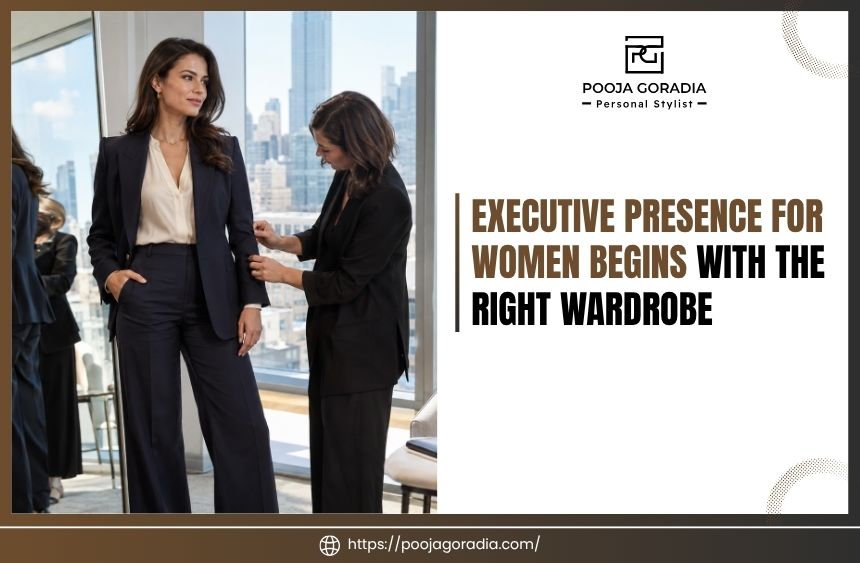
Executive presence begins with the right wardrobe when your clothes support the way you lead instead of distracting you from the work in front of you.
For women in leadership, the challenge is rarely a lack of clothing; it is usually a lack of clarity about what feels credible, comfortable, appropriate, and genuinely personal across different professional settings.
Your wardrobe cannot create authority on its own, but it can reinforce preparation, consistency, and confidence. This guide explains how fit, color, proportion, and outfit planning shape your professional image, with practical ideas for presentations, client meetings, networking, travel, hybrid work, and leadership roles in new york city and beyond.
What Executive Presence Really Means for Women in Leadership
Executive presence is often treated as a vague quality that some people naturally have. In practice, it is easier to understand as the impression created by your communication, behavior, preparation, and visual presentation over time.
Clothing is only one part of that impression, but it is the part people see before you begin speaking.
The goal is not to dress like someone else, follow a rigid power-dressing formula, or make your wardrobe more formal than your workplace requires.
The goal is to make your appearance feel consistent with your responsibilities and authentic to you. A strong professional image should help you feel prepared, not cost you comfort or self-expression.
The Three Parts of a Credible Professional Image
A polished leadership presence usually rests on three connected elements. First, your clothing should be appropriate to the setting. A board presentation, creative strategy session, client dinner, and internal video call may all require different levels of formality. These small choices help executive presence read as prepared, credible, and comfortable.
Second, your wardrobe should look intentional. This does not mean wearing expensive clothes or a new outfit every day. It may simply mean that your jacket fits correctly, your shoes are in good condition, your colors work together, and your outfit is suited to the message you need to convey.
Third, your clothes should allow you to participate fully. If a waistband restricts your movement, a shoe causes discomfort, or a jacket makes you self-conscious, the outfit is working against your presence.
Clothing that supports your day gives you more mental space for communication and decision-making. Fit and proportion can reinforce executive presence more effectively than a single statement piece.
Why Women Often Need More Wardrobe Clarity, Not More Clothes
Women in leadership often move between several expectations in a single week. You may need to appear authoritative without seeming unapproachable, polished without appearing overly formal, and current without looking trend-driven. Those competing pressures can lead to a closet filled with individual pieces but very few dependable outfits.
A common sign is the repeated purchase of “almost right” items. The jacket is attractive but does not layer comfortably.
The dress is polished but difficult to wear for a full day. The trousers fit at the waist but need tailoring at the hem. Over time, these small compromises create wardrobe fatigue.
Wardrobe styling starts by identifying the moments that matter most in your real schedule. At pooja goradia, this kind of planning is central to creating a wardrobe that feels functional rather than performative.
The right solution may be a focused edit, better outfit combinations, strategic alterations, or a more intentional shopping plan—not a complete replacement of everything you own.
Build the Wardrobe Foundations Behind Executive Presence
A leadership wardrobe becomes easier to manage when it is built around your actual responsibilities rather than an idealized version of a professional woman’s closet.
Before buying anything, consider where you spend time, how often you present, what you need to carry, how much movement your day requires, and which pieces already make you feel capable.
Start With the Settings You Actually Navigate
Begin by listing your most common professional situations. Include formal presentations, one-on-one meetings, client-facing work, networking events, travel days, office days, and remote meetings.
If you work in manhattan, you may also need to account for walking between appointments, changing weather, and the difference between a corporate office, a creative studio, and a restaurant used for business conversations.
This exercise reveals where your wardrobe is underdeveloped. You may have enough work clothes but no reliable presentation outfit. You may own excellent separates but lack comfortable shoes for commuting.
Or you may have polished dresses that do not layer well when temperatures change. A wardrobe built around real responsibilities gives executive presence a stronger visual foundation.
The answer is not always a separate outfit for every situation. Often, a few adaptable pieces can shift through styling. A structured jacket can make trousers and a knit top presentation-ready.
The same trousers may feel more relaxed with a fine-gauge sweater and streamlined flats. A dress can work for a client meeting with a jacket and for dinner with a change of accessories.
Create Reliable Outfit Formulas
An outfit formula is a repeatable structure that makes getting dressed easier. It is not a uniform. It is a dependable starting point that can adapt to your personality and schedule. In practice, executive presence is easier to support when clothing choices feel deliberate and repeatable.
Useful formulas might include a tailored jacket with a refined knit top and straight-leg trousers, a column of color under a contrasting jacket, or a midi dress with a structured layer and comfortable shoes. The best formula depends on your workplace, proportions, climate, and preferences.
The important point is to test the formula in real life. Sit in it, walk in it, reach for your bag, and consider whether the layers remain comfortable for several hours. A professional image should survive the practical demands of your day.
Invest in Versatility Rather Than Volume
A versatile wardrobe does not require every item to work in every situation. It requires enough overlap that your clothing earns regular use.
Before purchasing, ask whether a piece works with at least two or three items you already own, whether it supports a real part of your schedule, and whether you would choose it on a demanding morning. That practical consistency is an important part of executive presence.
This approach also supports more sustainable wardrobe decisions. Using what you already own, tailoring pieces that are close to working, and shopping for specific gaps can reduce impulse purchases. A smaller selection of well-integrated clothing often creates more outfit options than a crowded closet of disconnected items.
The purpose of a reset is not to impose a new identity. It is to create clearer choices. That consistency can strengthen executive presence without making the wardrobe feel performative.

How Fit, Color, and Proportion Influence Professional Image
Fit, color, and proportion are often more influential than labels or trends. They determine whether an outfit looks deliberate, whether you appear comfortable in it, and whether the clothing supports rather than competes with your communication.
These decisions should be individualized; there is no single silhouette or color palette that defines leadership.
Fit Is the First Signal of Intentional Dressing
Fit does not mean tight clothing. It means that the garment follows your body appropriately, allows movement, and sits where it was designed to sit.
A blazer with shoulders that are too wide can look borrowed, while one with a shoulder line that sits correctly can immediately make an outfit feel more considered.
Pay attention to sleeve length, trouser hems, jacket closure, neckline placement, and the amount of ease through the body.
If a garment pulls when you sit or creates constant adjustment, it is not serving you, even if the size on the label is technically correct. A coherent look helps executive presence feel natural rather than overly formal.
Alterations can make a meaningful difference, but not every item is worth tailoring.
A professional wardrobe review can help distinguish between a useful alteration, a poor-quality or unsuitable garment, and a piece that should simply leave the closet. This prevents the common mistake of keeping clothing because it might work someday.
Use Color Strategically Without Losing Personality
Color affects how an outfit is read, but it does not have to be dramatic to be effective. Neutrals can create consistency and make dressing easier, while a personal accent color can add recognition and energy.
The right balance depends on your coloring, workplace, industry, and the level of visibility you want in a particular setting. This kind of preparation supports executive presence by reducing avoidable visual distractions.
For a presentation, controlled contrast can help create a clear visual frame around your face. For a relationship-focused meeting, softer contrast may feel more approachable. In a conservative environment, color can appear through a blouse, scarf, shoe, or accessory rather than a highly saturated suit.
Power dressing fashion is most useful when it is treated as a tool rather than a costume. A color that makes you feel composed is usually more valuable than a color selected because it is considered traditionally authoritative.
Balance Structure With Comfort
Structure can communicate clarity, but too much structure can make an outfit feel rigid. Balance a tailored piece with a soft knit, fluid trouser, comfortable shoe, or uncomplicated accessory.
This is especially important when your day includes long meetings, commuting, travel, or several changes in temperature. This kind of preparation supports executive presence by reducing avoidable visual distractions.
Comfort also includes sensory comfort. Consider fabric weight, stretch, breathability, waist placement, and whether you can layer without feeling bulky. When an outfit is physically manageable, you are less likely to spend the day thinking about it.
What Should You Wear in Different Leadership Settings?
Executive presence should adapt to context. The same outfit may be excellent for an internal meeting and too casual for a client presentation, or appropriate for a daytime event but impractical for a travel-heavy schedule.
Rather than creating strict rules, use the setting to determine your level of structure, contrast, and polish.
Presentations and High-Visibility Meetings
For a presentation, prioritize clothing that stays in place, feels comfortable when standing, and keeps attention near your face. A well-fitting jacket, a clean neckline, and controlled color contrast can create a clear frame without appearing severe.
Avoid introducing an untested outfit on the day of an important presentation. Test the jacket while moving your arms, check whether the shoes are manageable, and consider how the outfit looks both in person and on camera.
If you use slides or visual materials, very busy prints may compete with the content, although personal preferences and workplace norms still matter. When the outfit works in motion, executive presence is easier to maintain throughout a demanding day.
Client Meetings and Relationship-Building Settings
Client-facing dressing often requires a balance between credibility and approachability. The right choice may be a polished trouser outfit, a refined dress with a relaxed layer, or a coordinated knit set with strong accessories. The appropriate level depends on the client’s environment and the purpose of the conversation.
A useful principle is to look intentional without making your clothing the most memorable part of the meeting. Reliable fit, clean lines, and thoughtful accessories usually do more than an overly dramatic statement piece. These small choices help executive presence read as prepared, credible, and comfortable.
Travel, Hybrid Work, and Long Days
Professional wardrobes now need to function beyond a traditional office. A travel outfit may need to move through an airport, a meeting, and dinner.
Hybrid work may require clothing that looks presentable on video but remains comfortable away from the desk. A reliable wardrobe lets executive presence come through without drawing attention away from the work.
Build around layers and pieces that resist wrinkling, coordinate easily, and can be worn more than once during a trip. Keep a small set of dependable accessories and shoes that shift the level of formality.
Outfit planning before travel can also prevent overpacking because each item has a defined role. A wardrobe built around real responsibilities gives executive presence a stronger visual foundation.
When a Professional Image Consultant Can Help
A professional image consultant can be especially helpful when your role has changed, your wardrobe no longer feels representative, or you are spending too much time shopping without finding dependable pieces. Fit and proportion can reinforce executive presence more effectively than a single statement piece.
Support can also be valuable before a major presentation, promotion, return to the office, or shift into a more visible leadership position. That consistency can strengthen executive presence without making the wardrobe feel performative.
Pooja goradia’s corporate styling service is designed for professionals who want their wardrobe to communicate more clearly at work while remaining personal and wearable. This kind of preparation supports executive presence by reducing avoidable visual distractions.
The process may involve clarifying your goals, assessing what you own, identifying practical gaps, and developing outfits for the settings you actually navigate. The scope and recommendations should be tailored to your needs rather than based on a fixed formula. That practical consistency is an important part of executive presence.
A location-aware styling process can take your commute, workplace environment, seasonal changes, and professional calendar into account without reducing your style to a city stereotype. When the outfit works in motion, executive presence is easier to maintain throughout a demanding day.

Wrapping Up
Executive presence is not created by a single suit, a specific color, or a wardrobe filled with expensive clothing. It develops when your appearance, communication, and behavior feel aligned with the role you hold and the way you want to lead.
The most useful wardrobe decisions are usually practical: improve fit, understand your settings, create repeatable outfit formulas, use color intentionally, and choose comfort that allows you to stay focused. In practice, executive presence is easier to support when clothing choices feel deliberate and repeatable.
For women in leadership, professional image should support authority without erasing individuality. A thoughtful wardrobe edit or corporate styling process can help you identify what is already working, clarify what is missing, and shop with greater intention. That consistency can strengthen executive presence without making the wardrobe feel performative.
If you are ready to make your wardrobe more consistent with your professional goals, contact Pooja Goradia to discuss corporate styling and determine what type of support fits your next step. A coherent look helps executive presence feel natural rather than overly formal.