Business Casual Outfits for Women: How to Dress Professionally
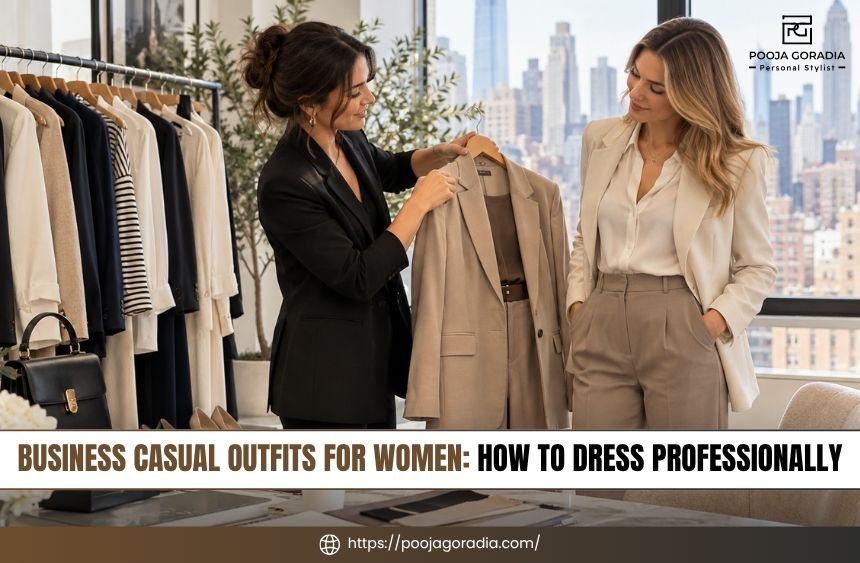
Business casual outfits for women should make getting dressed for work feel clear, polished, and comfortable, not like a daily test of whether your clothes are formal enough.
The challenge is that business casual does not look exactly the same in every office, and the wrong combination can feel either too relaxed or more formal than the situation requires.
The most useful approach is to understand the balance between ease and professionalism, then build outfit formulas that suit your workplace, commute, schedule, and personal style.
This guide covers business casual versus business professional attire, jeans, shoes, practical outfit ideas, workwear styling, and how a corporate capsule wardrobe can make your week simpler.
What Is Business Casual for Women?
What is business casual for women? In simple terms, it is a polished way of dressing that is less formal than a traditional suit but more intentional than everyday casual clothing.
It may include tailored trousers, knit tops, blouses, dresses, skirts, cardigans, blazers, loafers, ankle boots, or carefully chosen denim, depending on the workplace. That kind of consistency gives business casual outfits for women a polished, dependable foundation.
Business casual is not one universal formula. A creative office may welcome more color, print, or relaxed tailoring, while a corporate environment may expect darker neutrals, structured layers, and formal shoes.
Even within the same company, a client presentation may call for a different level of polish than an internal workday.
The Balance Between Professional and Relaxed
The easiest way to judge an outfit is to look at its overall message. Does it appear intentional, well-fitting, and appropriate for the people and setting you will encounter?
A soft sweater can look professional with pressed trousers and refined shoes. The same sweater may look too casual with distressed denim and worn sneakers.
Fit is often more important than price or trend. Clothing that skims rather than pulls, sleeves that end in the right place, and trousers with an appropriate hem can make a simple outfit look considered.
A garment does not need to be stiff to look professional, but it should look cared for. This is where business casual outfits for women become more useful than a collection of unrelated work pieces.
Polish also comes from finishing details: steamed clothing, clean shoes, coordinated colors, and accessories that do not compete with the rest of the outfit. These details are especially valuable when your wardrobe relies on comfortable basics.
How Workplace Culture Changes the Dress Code
Before buying anything, observe what people actually wear and consider your role. If you are new to an office, it is usually safer to begin slightly more polished and relax your outfits once you understand the culture.
A blazer, tailored cardigan, or structured tote can also make an outfit more adaptable when you are unsure.
For professionals commuting through manhattan or moving between offices, meetings, and after-work plans, versatility matters. An outfit may need to work with a long walk, changing weather, a desk, and an unexpected presentation.
Business casual dressing should support that reality rather than require constant outfit changes. A clear formula also makes business casual outfits for women easier to adapt across different office settings.
A useful question is: “would this outfit still feel appropriate if my day became more visible or formal than expected?” If the answer is yes, you have probably found the right level of polish.

Business Casual vs. Business Professional Attire
Business professional attire is generally more structured and formal than business casual. It often includes a matching suit or coordinated jacket and trousers, a tailored dress, formal separates, polished shoes, and restrained accessories. Business casual allows more flexibility in texture, color, layering, and the relationship between tailored and relaxed pieces.
Neither category is automatically better. The right choice depends on the context, your responsibilities, and how much authority or formality the occasion calls for. That balance keeps business casual outfits for women professional without making them feel rigid.
When to Choose Business Professional Attire
Business professional is often the safer choice for interviews, formal presentations, important client meetings, conferences with a conservative dress expectation, and occasions where you are representing an organization publicly. A matching suit is not the only option, but the outfit should have clear structure and consistency.
A tailored jacket with matching trousers or a skirt creates a strong foundation. Underneath, choose a blouse, shell, or fine-gauge knit that sits neatly beneath the jacket. Keep shoes polished and comfortable enough for the day, especially if commuting is part of your routine.
If you are uncertain about the expectation, use the formality of the event, not the average office day, as your guide.
It is easier to remove a jacket or soften an outfit later than to make a very casual outfit appear formal at the last minute. That kind of consistency gives business casual outfits for women a polished, dependable foundation.
When Business Casual Is Appropriate
Business casual works well for regular office days, internal meetings, collaborative work, and workplaces that explicitly describe their dress code as flexible or relaxed.
A common formula is one structured piece paired with one softer piece: tailored trousers with a knit top, a fluid midi skirt with a crisp shirt, or dark jeans with a blazer where denim is accepted.
Planning the complete look keeps business casual outfits for women practical from the commute through the last meeting.
The distinction is often created through proportion. Relaxed wide-leg trousers may need a more refined top or shorter jacket. A loose blouse may look more balanced with straight-leg pants.
A polished dress can become business casual with a cardigan or less formal shoe, while a blazer can make an otherwise simple outfit feel meeting-ready.
Avoid treating business casual as permission to wear anything that is comfortable. Leggings as pants, visibly worn clothing, beachwear details, very sheer fabrics, and clothing designed primarily for exercise usually need a more intentional styling solution before they belong in most professional settings.
When in doubt, consider whether the item looks designed for work and whether it can be combined with a structured piece. Thoughtful fit helps business casual outfits for women look intentional even when the individual pieces are simple.
Business Casual Outfit Ideas for Women That Work in Real Life
The best business casual wardrobe is built around combinations you can repeat, not a collection of isolated pieces that only create one outfit each. These outfit ideas can be adjusted for climate, office culture, color preference, and comfort.
The goal is to create dependable starting points that reduce morning decision fatigue. This is where business casual outfits for women become more useful than a collection of unrelated work pieces.
Reliable Outfit Formulas
A few flexible formulas include:
- Tailored trousers, a fine-gauge sweater, loafers, and a structured bag. This is an easy regular-office outfit that can become more formal with a blazer.
- A midi skirt, tucked blouse, cardigan, and ankle boots. This combination adds movement and softness while maintaining a clear professional shape.
- A simple dress, jacket or cardigan, and polished flats. The dress handles most of the outfit work, while the layer helps with temperature and formality.
- Straight-leg trousers, a knit shell, a relaxed blazer, and low-profile shoes. This works particularly well when you need to move between desk work and meetings.
- Dark, clean denim, a crisp shirt, a refined belt, and loafers, if jeans are accepted in your workplace. The shirt and shoes keep the outfit from feeling like weekend dressing.
Use these formulas as frameworks rather than rules. If you prefer skirts, avoid them, or need footwear with extra support, the same principles can be adapted without compromising your identity. This makes business casual outfits for women easier to repeat without sacrificing polish.
How to Make an Outfit Look Intentional
Start with one anchor piece. This might be a jacket, a pair of excellent trousers, a dress, or a polished shoe. Then choose supporting pieces that repeat at least one quality of that anchor, such as color, texture, structure, or level of formality.
Color coordination does not require a wardrobe made entirely of black, navy, and gray. A neutral base with one color accent can feel professional and personal.
For example, olive trousers may work with cream, navy, or soft blue. A burgundy shoe can add interest to a charcoal and white outfit without dominating it.
Pay attention to visual balance. If the top is oversized, a straighter or more controlled bottom may create a cleaner silhouette. If the trousers are wide and fluid, a tucked or shorter top can help define the shape.
These choices are not about enforcing one body type or hiding your body; they are about helping the clothes work together. This makes business casual outfits for women easier to repeat without sacrificing polish.
Finally, check the practical details. Can you sit comfortably? Will the fabric crease immediately? Does the neckline work with your office environment? Can you walk between appointments?
Workwear styling is successful when the outfit looks good at 8 a.m. and still functions later in the day. That balance keeps business casual outfits for women professional without making them feel rigid.
Are Jeans Business Casual? Choosing Shoes and Finishing Pieces
Two questions come up frequently when women are building a work wardrobe: are jeans business casual, and which shoes make an outfit look professional without becoming uncomfortable?
Both decisions depend on context, but a few guidelines can make the answer clearer. In practice, business casual outfits for women work best when every piece supports the full workday.
Are Jeans Business Casual?
Jeans can be business casual in some workplaces, but they are not appropriate everywhere. The most important factors are your office culture, the day’s schedule, the denim’s condition, and how the rest of the outfit is styled.
A clear formula also makes business casual outfits for women easier to adapt across different office settings.
Choose a clean, dark or even-toned wash with a tailored silhouette when denim is allowed. Straight-leg, slim, or carefully proportioned wide-leg styles are generally easier to dress for work than distressed, heavily faded, ripped, or overly casual shapes.
A neat hem and good fit matter more than the brand name. This makes business casual outfits for women easier to repeat without sacrificing polish.
Pair denim with a blouse, fine knit, blazer, belt, loafer, or refined boot. Avoid combining casual denim with several other casual signals at once, such as a graphic t-shirt, athletic sneakers, and a slouchy sweatshirt.
One relaxed element is easier to make work than an entire outfit built around weekend pieces. Used this way, business casual outfits for women can feel personal while still respecting the workplace.
When meeting clients, interviewing, presenting, or entering a conservative environment, choose trousers or a skirt instead unless you know denim is expected.
If your office has “jeans days,” use those days to test the boundary without assuming the same outfit works for every professional situation. Used this way, business casual outfits for women can feel personal while still respecting the workplace.
Business Casual Shoes for Women
The best business casual shoes for women combine appropriate formality with the ability to get through a real workday. Loafers are versatile and practical, while ballet flats can work well when they have enough structure and support.
Ankle boots are useful in cooler months, particularly with trousers, skirts, and dresses. That kind of consistency gives business casual outfits for women a polished, dependable foundation.
Pumps can make an outfit more formal, but a lower heel is often more functional for commuting and long days. Refined sneakers may be appropriate in some offices, especially when they are clean, minimal, and paired with polished clothing.
They are less suitable for formal presentations or conservative client settings. Planning the complete look keeps business casual outfits for women practical from the commute through the last meeting.
Think about the full route of your day. If you walk several blocks, take public transportation, or move between buildings, choose shoes you can genuinely wear. Carrying uncomfortable shoes rarely solves a wardrobe problem long term.
A practical workwear wardrobe may include a commuting shoe, a polished office shoe, and one more formal option for presentations or events. In practice, business casual outfits for women work best when every piece supports the full workday.

Building a Corporate Capsule Wardrobe Through Intentional Shopping
A corporate capsule wardrobe is not a fixed list of clothing that every woman must own. It is a coordinated group of pieces that work together for your professional life.
The value comes from reducing gaps and repetition, not from owning as few items as possible. For many workplaces, business casual outfits for women succeed because they combine comfort with visible care.
Begin by reviewing your actual week. Note how many days you spend in the office, how often you meet clients, whether you work remotely, how much you commute, and which seasons create the most difficulty.
A wardrobe for a formal finance environment will not have the same needs as one for a creative studio or a hybrid workplace. Thoughtful fit helps business casual outfits for women look intentional even when the individual pieces are simple.
The Core Pieces to Evaluate
A useful wardrobe review may include tailored trousers, a jacket, polished knitwear, blouses or shells, a dress, a skirt if you wear one, appropriate denim if permitted, versatile shoes, and a work-ready bag.
The exact number depends on your schedule and laundry routine. In practice, business casual outfits for women work best when every piece supports the full workday.
Look for connections between pieces. A trouser should work with at least two or three tops. A jacket should coordinate with more than one bottom. Shoes should support several outfit formulas instead of belonging to only one look.
If a garment requires a very specific bra, shoe, weather condition, or alteration every time, it may not be as versatile as it first appeared. This is where business casual outfits for women become more useful than a collection of unrelated work pieces.
Before shopping, separate wardrobe needs into three categories: items that are missing, items that need tailoring or repair, and items that are present but not being used.
This prevents the common mistake of buying another blouse when the real issue is that your trousers do not fit well or your outfits lack a third layer. For many workplaces, business casual outfits for women succeed because they combine comfort with visible care.
How Workwear Styling Solves Morning Decision Fatigue
Professional shopping is most useful when it begins with a clear problem. You may need a small workwear refresh after changing roles, help finding trousers that work with your existing shoes, outfits for a new office, or a more polished wardrobe that still feels comfortable.
A clear formula also makes business casual outfits for women easier to adapt across different office settings.
A thoughtful shopping process considers your current closet before recommending additions. At pooja goradia, personal shopping can support this kind of focused wardrobe building by connecting your lifestyle, preferences, work environment, and practical needs.
Thoughtful fit helps business casual outfits for women look intentional even when the individual pieces are simple.
The goal is not to fill your closet quickly; it is to identify pieces that earn their place and create more complete outfits. That balance keeps business casual outfits for women professional without making them feel rigid.
Use Shopping Support to Connect the Wardrobe
For someone who feels stuck in front of a full closet, a style reset or wardrobe-focused review may be a useful starting point before shopping.
Reviewing what you own can reveal underused combinations, fit adjustments, and genuine gaps. This is where business casual outfits for women become more useful than a collection of unrelated work pieces.
That sequence can make shopping more sustainable because it uses existing clothing more effectively and reduces impulse purchases. That balance keeps business casual outfits for women professional without making them feel rigid.
If your work wardrobe needs to function across meetings, commuting, travel, and changing seasons, professional guidance can also help you prioritize. A clear formula also makes business casual outfits for women easier to adapt across different office settings.
Instead of buying several pieces that are individually attractive, you can focus on the few additions that connect the wardrobe and make dressing easier. In practice, business casual outfits for women work best when every piece supports the full workday.
Also looking for business dinner outfits? Get inspired by stylish looks that work from the office to dinner.
Wrapping Up
Business casual dressing works best when it reflects the expectations of your workplace and the realities of your day. Start with fit, polish, and proportion. That balance keeps business casual outfits for women professional without making them feel rigid.
Use structured pieces to balance relaxed ones, decide thoughtfully whether denim belongs in your office, and choose shoes that support both your professional image and your commute. This makes business casual outfits for women easier to repeat without sacrificing polish.
The most effective business casual outfits for women are not necessarily the most trend-driven or expensive. They are the combinations you can wear confidently, repeat in different ways, and adapt when your schedule changes.
A corporate capsule wardrobe can help, but it should be built around your actual role, comfort needs, climate, and personal style. In practice, business casual outfits for women work best when every piece supports the full workday.
If your closet contains plenty of clothes but few dependable work outfits, pooja goradia can help you approach the problem with more clarity.
Through personal shopping and related wardrobe support, the process can focus on practical outfit building, intentional purchases, and a professional wardrobe that feels like you. This makes business casual outfits for women easier to repeat without sacrificing polish.
The next step is to identify the work situations that create the most dressing difficulty so your shopping plan solves the right problem from the start. Used this way, business casual outfits for women can feel personal while still respecting the workplace.