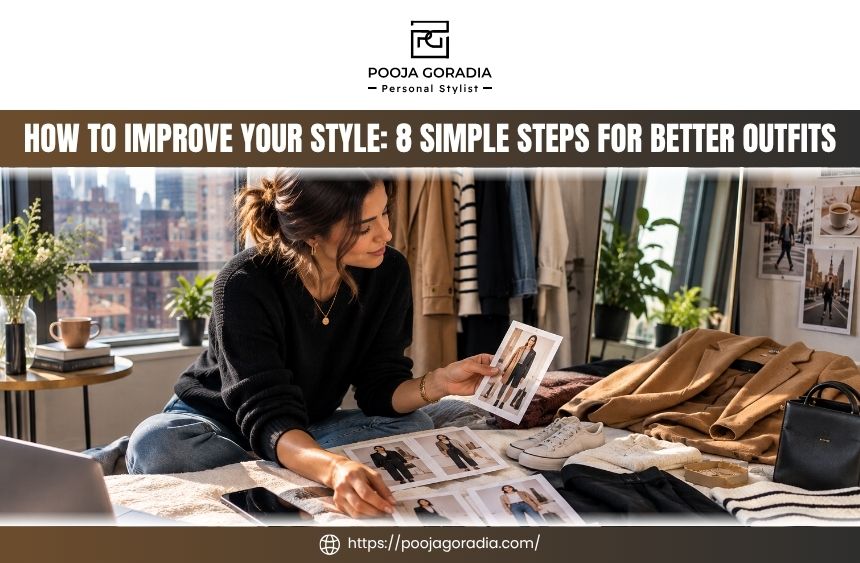
How to Improve Your Style: 8 Simple Steps for Better Outfits
How to improve your style starts with making better decisions about the clothes you already own, not with buying an entirely new wardrobe.
If you regularly stand in front of a full closet and still feel that you have nothing to wear, the problem may be unclear priorities, inconsistent fit, missing outfit formulas, or purchases that do not work with your real life.
This guide explains eight practical ways to improve your style, from defining your personal preferences and editing your wardrobe to using color, accessories, trends, and intentional shopping more effectively.
How to Improve Your Style: Build a Clear Personal Style Foundation
Before changing your wardrobe, identify what you want your clothes to do for you. Personal style becomes easier to improve when it reflects your schedule, comfort level, personality, and the environments in which you actually get dressed.
Define What You Want Your Style to Communicate
Start with three to five words that describe how you want to feel and appear in your clothes. You might choose polished, relaxed, feminine, modern, creative, minimal, or approachable.
These words are not rules. They are filters that help you decide whether a garment supports the direction you want to take.
For example, someone who wants a polished but relaxed wardrobe may prefer clean layers, refined knitwear, simple jewelry, and structured shoes rather than heavily embellished pieces.
Someone who wants a more expressive wardrobe may use color, print, or unusual accessories as focal points while keeping the rest of an outfit uncomplicated. Over time, these small adjustments make the process of learning how to improve your style feel more natural and personal.
Your style words should also account for comfort. If you dislike restrictive waistbands, delicate fabrics, or shoes that are difficult to walk in, those preferences belong in your style strategy. An outfit is not successful if it looks appealing in theory but does not suit your movement, routine, or day.
Notice What You Wear on Repeat
Look at the outfits you reach for when you are not overthinking your appearance. Which silhouettes, colors, necklines, and fabrics appear repeatedly? Which pieces make you feel put together with minimal effort? A complete outfit test makes it easier to understand how to improve your style in everyday life.
This exercise often reveals more than a mood board. You may discover that your wardrobe already leans toward minimalist fashion, even if you have been buying trend-driven pieces.
You may also notice that you consistently combine a fitted top with relaxed trousers, or a simple dress with a jacket and flats. These repeated combinations are clues to your natural outfit preferences.
At Pooja Goradia, this kind of observation is an important part of creating practical style direction. The goal is not to impose an identity on your wardrobe. It is to clarify what feels authentic so future purchases and outfit decisions become easier.
Edit Your Wardrobe and Improve the Fit
A wardrobe edit is not simply a process of getting rid of clothes. It is a way to understand what is supporting your style, what is creating decision fatigue, and what needs to change before you shop for anything else.
A focused edit can reveal how to improve your style using many of the pieces you already own.
Edit by Usefulness, Not Guilt
Take each item through a few practical questions: Does it fit now? Have you worn it recently? Does it work with at least two or three other pieces? Is it comfortable enough for the occasion it is meant to serve? Is it in good condition?
Separate clothing into clear groups such as keep, alter, repair, reconsider, and release. The reconsider category is useful for items that may work after a small adjustment or with a different styling approach.
It prevents you from making rushed decisions while still keeping the edit focused. Small, repeatable choices are often the clearest answer to how to improve your style.
Avoid keeping clothes only because they were expensive, once fit well, or might be useful someday. Those reasons can preserve a closet full of emotional and practical friction. A smaller group of reliable pieces is often more valuable than a larger wardrobe filled with items you continually reject.
A thoughtful edit can also support more sustainable dressing. Using what you already own, repairing worthwhile pieces, and identifying genuine gaps helps reduce impulse purchases and makes each future addition more useful.
Treat Fit as a Styling Tool
Fit is one of the fastest ways to improve an outfit, but good fit does not mean every garment must be tight or tailored. It means the clothing works with your proportions, movement, and intended shape.
Pay attention to shoulder seams, sleeve length, trouser break, waist placement, rise, and the way fabric falls across the body. A simple outfit can look considered when these details are right.
Conversely, an expensive garment can feel unfinished when it pulls, bunches, collapses, or overwhelms the wearer. That kind of intentional decision-making is central to learning how to improve your style.
Alterations can be worthwhile for pieces you already love, but not every item deserves tailoring. Consider the alteration cost, the quality of the garment, and how often you will wear it.
A professional wardrobe review can help you distinguish between a useful adjustment and a piece that is simply not working.
This habit supports the process of learning how to improve your style because it separates genuine wardrobe gaps from impulse wants.
Create Better Outfits With Color and Outfit Formulas
Many people do not need more clothing ideas for women; they need a repeatable way to combine the clothing they own. Color and outfit formulas make that process more predictable without making your wardrobe feel rigid.
Choose a Wearable Color Strategy
You do not need to limit yourself to a small number of colors, but it helps to know which shades work together easily. Begin with the colors you wear most comfortably, then identify supporting neutrals and one or two accent colors.
Neutrals can include black, navy, gray, cream, white, brown, olive, or denim. The right mix depends on your existing wardrobe and preferences.
If your closet is mostly dark neutrals, a cream knit, soft blue shirt, or warm brown accessory may add variety without forcing a dramatic change. This habit supports the process of learning how to improve your style because it separates genuine wardrobe gaps from impulse wants.
White outfits for women are a useful example of how color strategy can create different effects. White denim with a soft knit can feel casual and fresh.
A white shirt with tailored trousers can look crisp and professional. Layering ivory, cream, and bright white can create depth when the textures or silhouettes differ.
Consider practicality, too. The best color plan is one you will wear. If you avoid colors that require constant maintenance or do not feel comfortable near your face, they should not become the foundation of your wardrobe simply because they are fashionable.
This is a practical way to learn how to improve your style without buying more clothing.
Build Outfit Formulas You Can Repeat
An outfit formula is a reliable structure that you can adapt with different pieces. It reduces decision fatigue while leaving room for personal expression.
Useful formulas might include a fitted knit, relaxed trousers, and loafers; a button-down shirt, straight-leg jeans, jacket, and simple jewelry; or a dress, lightweight layer, and comfortable ankle boots. The formula is not a uniform. Change the color, texture, proportion, or accessory to suit the day.
When you create an outfit, complete it before judging it. Add the shoes, bag, outer layer, and jewelry you would realistically wear. Many wardrobe pieces feel unhelpful only because they have never been placed in a complete combination.
Take quick photos of outfits that work. A personal outfit library can show you which combinations deserve repeating and which wardrobe gaps are genuine.
It is also more useful than buying another item because you felt uninspired one morning. That evidence from your own closet can show you how to improve your style more reliably than a trend list.

Use Accessories and Trends Without Losing Your Style
Accessories and current fashion trends can make a familiar wardrobe feel more relevant, but they should support your personal style rather than replace it. The most effective updates are usually selective and easy to integrate.
Let Accessories Finish the Outfit
Accessories add direction, proportion, and personality. A belt can define a silhouette, a structured bag can make relaxed clothing feel more intentional, and earrings can bring attention to the face without changing the entire outfit.
When you repeat what works, you learn how to improve your style with much less guesswork.
Start by asking what the outfit needs. Does it look unfinished, too plain, too soft, or visually unbalanced? Choose one or two finishing elements that solve that issue.
Adding every accessory at once can make an outfit feel busy and can hide the shape of the clothing itself. That kind of intentional decision-making is central to learning how to improve your style.
Pay attention to scale. A delicate necklace may disappear against a heavy sweater, while an oversized bag may overwhelm a very light outfit.
This is not about strict fashion rules; it is about creating visual balance and choosing details that can be seen and used. A focused edit can reveal how to improve your style using many of the pieces you already own.
Evaluate Current Style Trends Carefully
Current style trends can provide inspiration, but not every trend deserves space in your closet.
Before buying something new, ask whether it fits your lifestyle, works with at least three existing pieces, and feels compatible with the style words you identified earlier. This is a practical way to learn how to improve your style without buying more clothing.
Also consider how long you are likely to wear it. A trend can be a good purchase when it updates a familiar silhouette, fills a real wardrobe gap, or gives you a fresh way to wear clothes you already own.
It is less useful when it requires several additional purchases to make sense. Fit, proportion, and comfort provide useful clues when you are learning how to improve your style before you shop.
Current fashion trends are best treated as options, not obligations. You can borrow a color, proportion, fabric, or styling detail without adopting the entire look.
For example, you might try a modern shoe shape with your existing trousers rather than replacing your whole wardrobe. That evidence from your own closet can show you how to improve your style more reliably than a trend list.
A custom styling process is particularly helpful when you like fashion but struggle to translate inspiration into daily outfits.
Pooja Goradia can help identify which ideas suit your wardrobe, routine, and comfort preferences, so an update feels personal rather than copied. When you repeat what works, you learn how to improve your style with much less guesswork.
Shop Intentionally and Know When Custom Styling Helps
Shopping becomes more productive when it begins with a specific problem. Instead of asking, “What should I buy?” ask, “What outfit or wardrobe need am I trying to solve?” That question changes the entire experience.
This habit supports the process of learning how to improve your style because it separates genuine wardrobe gaps from impulse wants.
Shop From a Defined Wardrobe Need
Create a short shopping list based on your real calendar. You may need a versatile layer for work, comfortable shoes for commuting, an outfit for an upcoming event, or pieces that connect several existing separates.
A complete outfit test makes it easier to understand how to improve your style in everyday life.
Before purchasing, check whether the item works with at least three pieces you own and whether you can imagine wearing it in more than one setting. Consider care requirements, weather, comfort, and the shoes or undergarments it may require.
A garment that looks excellent but creates a new set of problems is not necessarily a wardrobe upgrade. A complete outfit test makes it easier to understand how to improve your style in everyday life.
Set a pause point for uncertain purchases. Save the item, leave the store, or wait a day before deciding. This creates room to distinguish genuine usefulness from the temporary excitement of something new.
Intentional shopping is not about never buying. It is about buying with enough information to make the purchase worthwhile. Fit, proportion, and comfort provide useful clues when you are learning how to improve your style before you shop.
Understand When You Need Tailored Guidance
Self-directed style improvement works well when you can identify your preferences and make decisions with reasonable confidence. When you repeat what works, you learn how to improve your style with much less guesswork.
Professional support can be valuable when the problem is difficult to define or when you repeatedly buy clothes that do not become outfits. That evidence from your own closet can show you how to improve your style more reliably than a trend list.
Custom styling may be a good fit if you are navigating a lifestyle change, preparing for a new type of professional setting, refreshing your wardrobe after a long period of dressing on autopilot, or wanting a more coherent style without starting over.
This habit supports the process of learning how to improve your style because it separates genuine wardrobe gaps from impulse wants.
It can also help when your closet contains good pieces but lacks combinations that feel current and comfortable. Small, repeatable choices are often the clearest answer to how to improve your style.
Turn Styling Guidance Into a Practical Plan
At Pooja Goradia, custom styling is designed around the individual rather than a fixed template.
The process can focus on your goals, wardrobe, lifestyle, preferred level of experimentation, and practical concerns. A complete outfit test makes it easier to understand how to improve your style in everyday life.
For clients who want to begin with greater clarity, a New York wardrobe consultation can provide a focused starting point, with service details and availability confirmed directly. A focused edit can reveal how to improve your style using many of the pieces you already own.
The value of professional styling is not simply receiving more outfit ideas. It is learning why certain pieces work, which gaps matter, how to shop with a plan, and how to build combinations you can repeat.
That evidence from your own closet can show you how to improve your style more reliably than a trend list.
That knowledge helps you improve your style while protecting your time, budget, and existing wardrobe. This is a practical way to learn how to improve your style without buying more clothing.

Wrapping Up
Learning how to improve your style is an ongoing process of making clearer choices. Define what feels authentic, edit for usefulness, improve fit, create repeatable outfit formulas, use color intentionally, finish looks with purposeful accessories, evaluate trends selectively, and shop only when you can name the need.
You do not have to become someone else to dress well. Your strongest wardrobe will reflect your actual life, including the way you move, work, relax, travel, and want to feel. Small, repeatable choices are often the clearest answer to how to improve your style.
Start with one small change, such as photographing three reliable outfits or removing pieces that consistently create frustration. Over time, these small adjustments make the process of learning how to improve your style feel more natural and personal.
When the right next step is difficult to identify, Pooja Goradia can help you turn scattered wardrobe concerns into a practical styling direction. This is a practical way to learn how to improve your style without buying more clothing.
Schedule a consultation with Pooja Goradia to discuss your goals and explore a custom approach to improving your personal style. That kind of intentional decision-making is central to learning how to improve your style.