How to Dress in Your 40s to Develop Modern Personal Style
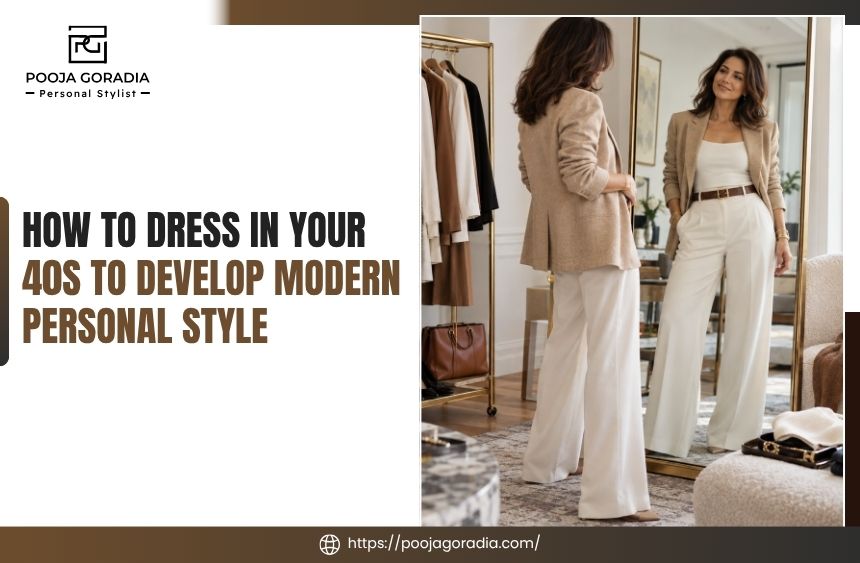
How to dress in your 40s becomes much easier when you stop treating your wardrobe as a test you can fail and start treating it as a reflection of the life you actually live.
You may have more clothing than ever, yet still feel that nothing looks quite right, feels current, or works for the day ahead.
Your style does not need to become more conservative, trend-driven, or complicated with age. It needs to become more intentional.
This guide will help you define what feels like you now, edit what no longer serves you, improve fit, build a flexible wardrobe, and use trends without losing your confidence or authenticity.
How to Dress in Your 40s Without Starting Over
Learning how to dress in your 40s is not about replacing everything in your closet. In many cases, the most useful wardrobe work begins with understanding what you already own and why certain pieces never make it into rotation.
A closet can be full and still lack the combinations, proportions, and finishing details that make getting dressed straightforward.
The goal is not to create a wardrobe that looks impressive in isolation. It is to build one that supports your mornings, your work, your social life, your comfort, and the way you want to be perceived.
Start With Your Current Life
Begin with your calendar rather than a shopping list. Think about the settings that make up a normal month: office days, working from home, school or family commitments, dinners, travel, cultural events, weekends, and occasions that require a little more polish.
A practical approach to deciding how to dress starts with what fits your current routine.
If most of your clothes belong to a former job, a former body, or a former routine, the problem may not be that you have poor taste. Your wardrobe may simply be out of sync with your current life.
A tailored jacket that once supported a formal office may now sit untouched, while your casual clothes may not feel finished enough for meetings, errands, or lunch with friends. This is part of learning how to dress with more confidence at this stage of life.
Write down the situations for which you regularly struggle to get dressed. This is more useful than beginning with a vague goal such as buying better clothes. It tells you where your wardrobe needs practical support.
Replace Age Rules With Style Criteria
There is no universal list of what women in their 40s should avoid. Clothing looks modern when it fits your proportions, suits the setting, works with your lifestyle, and feels intentional.
Those standards are more helpful than rules about hemlines, colors, denim, or prints. When you know how to dress for your real life, shopping becomes more selective.
For example, a short skirt may feel entirely appropriate with opaque tights, a structured jacket, and comfortable shoes in one wardrobe, while it may not suit another person’s routine or personal taste.
The question is not whether the garment is technically allowed. The question is whether it feels like a considered choice.
Use five criteria when evaluating a piece:
- Does it fit your body comfortably today?
- Can you style it for at least two or three real situations?
- Does it support the image you want to communicate?
- Is it compatible with the shoes, layers, and undergarments you actually wear?
- Would you choose it again if you were shopping with a clear plan?
These questions make fashion over 40 less about restriction and more about discernment. That makes it easier to decide how to dress without relying on age-based rules.
Identify the Wardrobe Problems First
Common wardrobe frustrations often point to a specific underlying issue. A closet full of basics may indicate that you are missing personality pieces. Many statement items may reveal that you have not built enough foundations.
Clothes that technically fit but never feel right may need tailoring, better styling, or a different proportion. The goal is to make decisions about how to dress feel current, comfortable, and recognizably yours.
Before buying anything, pull out the pieces you wear most often. Notice what they have in common. Perhaps you prefer open necklines, soft tailoring, straight-leg pants, tonal colors, fluid fabrics, or a particular level of structure.
Those patterns are valuable evidence. They can guide your next wardrobe decision more effectively than a trend report.
What Is My Style? A Practical Way to Find the Answer
When women ask, “what is my style?” They are often looking for a label. They may wonder whether they are classic, casual, minimalist, bohemian, or something else.
Labels can be useful as a starting point, but they rarely tell you how to dress on a tuesday morning or what to buy when you are standing in a fitting room.
A more useful answer comes from identifying the repeated choices that make you feel comfortable, confident, and recognizable to yourself.
Look for Patterns in What You Already Wear
Review your most-worn outfits, not your fantasy wardrobe. Which colors do you reach for repeatedly? Do you prefer contrast or a quieter tonal palette? Are you happiest in pieces that skim the body, define the waist, create structure through the shoulders, or allow more movement?
Look at your shoes as well. They often reveal the practical truth about your lifestyle. If you rarely wear delicate heels, building an outfit around them may create more frustration than style.
If sneakers, loafers, or low boots are your daily foundation, learn how to make them part of polished combinations rather than treating them as an afterthought.
Take photographs of outfits you wear and like. Over a few weeks, patterns become easier to see.
You may discover that your style is not one category but a combination, such as relaxed tailoring, modern femininity, or polished ease. Small proportion updates can influence how to dress without requiring a completely new wardrobe.
Create Three to Five Style Anchors
Choose three to five words that describe how you want your clothes to feel and function. These might include polished, relaxed, refined, expressive, minimal, feminine, practical, or architectural. The words should help you make decisions, not limit you.
For example, if your anchors are polished, comfortable, and modern, a useful outfit may include relaxed trousers, a fine-gauge sweater, a structured bag, and contemporary flats. If your anchors are feminine, effortless, and expressive, you might prefer a fluid dress, a textured layer, and one distinctive accessory.
The value is in the combination. One word alone can become vague. A small group of anchors gives you a filter for shopping and a language for explaining what is missing when an outfit feels wrong.
Fit and comfort often clarify how to dress more effectively than chasing a new trend.
Use Fit as Information, Not Judgment
Fit has a greater effect on how an outfit looks than the price or label of a garment. It also changes over time. Bodies change, brands use inconsistent sizing, and the same person may prefer different amounts of ease in different clothes.
Do not treat a size on a tag as a measurement of your body or your style. Pay attention to where fabric pulls, collapses, twists, or creates discomfort. Check whether a shoulder seam sits correctly, whether a waistband stays in place, and whether a jacket can close without restricting movement.
Tailoring can help when the garment is fundamentally right but needs a small adjustment. It cannot always solve an unsuitable cut, poor fabric, or a proportion that conflicts with how you want to move.
A thoughtful wardrobe review separates those situations so you do not spend money trying to rescue pieces that were never right for you. When you know how to dress for your real life, shopping becomes more selective.
This is one reason a personal style consultation can be useful. An experienced stylist can help you distinguish between a fit issue, a styling issue, and a garment that simply does not belong in your wardrobe.

Build a Wardrobe That Works Harder, Not Larger
A strong wardrobe is not necessarily a small wardrobe. It is a wardrobe in which the pieces support one another and earn their space. The right number of garments varies by lifestyle, laundry routine, climate, work requirements, and personal preference.
A strict capsule formula is less important than having enough useful combinations. A practical approach to deciding how to dress starts with what fits your current routine.
The most effective wardrobe edits usually reduce confusion before they add anything new.
Edit Before You Shop
Set aside enough time to review your closet in categories rather than trying to make every decision at once. Look at tops, bottoms, layers, dresses, shoes, and accessories. Try on the pieces that are questionable instead of relying on memory.
Sort garments into practical groups: pieces you wear and like, pieces that need tailoring or repair, pieces that work only with a specific outfit, pieces that no longer fit your life, and pieces you are keeping for an imagined future.
The last category deserves particular attention. Keeping something because it represents who you hope to become can take up space needed by the wardrobe you need now. A few reliable formulas can simplify how to dress for work, weekends, and social plans.
Do not rush to donate every item that is not currently in rotation. Some clothes may be seasonal, sentimental, or useful for a specific occasion. The goal is not emotional minimalism. The goal is clear access to the clothing you can realistically use.
Create a Flexible Capsule Wardrobe
A capsule wardrobe should make dressing easier, not make your style feel repetitive. Start with the situations you need to cover and create a few reliable outfit families for each one.
A work capsule may need trousers, skirts, knitwear, shirts, jackets, and comfortable professional shoes. A weekend capsule may rely more on denim, relaxed layers, easy tops, and practical footwear. A few reliable formulas can simplify how to dress for work, weekends, and social plans.
A useful capsule wardrobe checklist includes:
- A small group of bottoms that fit well and work with multiple tops.
- Layers that change the formality and proportion of an outfit.
- Shoes that support your actual routine rather than an idealized one.
- A few personality pieces, such as color, print, texture, jewelry, or a distinctive bag.
- At least one complete outfit for situations that commonly cause stress.
Test the capsule by creating outfits, not by counting items. If one pair of pants works with only one top, it may be a good garment but a weak wardrobe investment. If a simple jacket connects several outfits, it may be more valuable than another eye-catching piece.
Make Casual Outfits Feel Intentional
Casual outfits for women over 40 often fail because they contain comfortable pieces but no clear relationship between them. The solution is not necessarily more polish or less comfort. It is proportion and finishing. Fit and comfort often clarify how to dress more effectively than chasing a new trend.
Try pairing a relaxed bottom with a more structured top layer. Balance a fuller pant with a closer-fitting or neatly tucked top. Add texture through denim, knitwear, suede, leather, or a substantial cotton shirt. Choose footwear that relates to the outfit’s level of ease, then finish with one deliberate accessory.
A simple example might be straight-leg jeans, a fine-knit sweater, a blazer or overshirt, and loafers. Another could be wide-leg trousers with a tucked tee, a cropped jacket, and clean sneakers.
The pieces are familiar; the difference comes from proportion, condition, and intention. This is part of learning how to dress with more confidence at this stage of life.
How to Wear Trends Without Losing Your Personal Style
Trends can be useful when they help you update the way you wear clothes you already own. They become expensive and distracting when they encourage purchases that do not connect to your lifestyle. You do not need to adopt every new silhouette to look current.
The best trend decisions usually begin with a wardrobe need. Perhaps your existing jeans feel dated, your shoes no longer work with your proportions, or your layers lack versatility.
A trend may offer a helpful direction, but it should still pass through your personal style filter. These repeatable choices show you how to dress in a way that still feels personal.
Choose the Right Entry Point
If you are unsure about a trend, begin with a lower-commitment category. Shoes, eyewear, jewelry, a bag, a scarf, or a color can introduce freshness without requiring a complete change in silhouette.
Knitwear, denim, and tailoring can also update a wardrobe while remaining useful for more than one season. Fit and comfort often clarify how to dress more effectively than chasing a new trend.
A trend piece is more likely to earn its place if it works with at least three items you already own. Consider whether you can wear it with your usual shoes and undergarments, whether it suits your climate, and whether it fits your daily movement.
A beautiful item that requires a new wardrobe around it is not always the best next purchase. These repeatable choices show you how to dress in a way that still feels personal.
Check the Trend Against Your Real Wardrobe
Before buying, ask yourself:
- Do I like this item, or do I like the way it is styled in a photograph?
- Does the shape support the proportions I enjoy wearing?
- Can I imagine using it in my actual week?
- Will it replace or improve something I already own?
- Does it align with my style anchors?
These questions are especially useful when shopping online, where styling, lighting, and model proportions can make a garment appear more versatile than it is. When you know how to dress for your real life, shopping becomes more selective.
Keep Modernity in the Details
Modern personal style often comes from small decisions rather than dramatic reinvention. A current shoe shape can change the feel of familiar trousers. A more intentional tuck can improve proportion.
A jacket worn open, a sleeve pushed to the right point, or a layered necklace can make a simple outfit feel considered. A practical approach to deciding how to dress starts with what fits your current routine.
Pay attention to condition, too. Pilling, tired footwear, stretched necklines, and worn-out bags can make an otherwise strong wardrobe look less polished.
Replacing one heavily used finishing piece may have more impact than buying several new garments. That makes it easier to decide how to dress without relying on age-based rules.
At Pooja Goradia, the focus is not on making every client look the same or pushing a predetermined version of fashion over 40.

When a Style Reset Can Make Getting Dressed Easier
Sometimes the issue is not a lack of information. You may already know that fit matters, understand your favorite colors, and own several good basics.
The difficulty is turning that knowledge into a wardrobe that works together. That makes it easier to decide how to dress without relying on age-based rules.
A Style Reset can be helpful when you feel caught between versions of yourself. Perhaps your clothes reflect a past career, your lifestyle has changed, or you keep buying individual pieces without knowing how they fit into complete outfits.
You may also be tired of making the same mistakes and want a clearer process before spending more. This is part of learning how to dress with more confidence at this stage of life.
Signs You Need More Than a Shopping Trip
A shopping trip can add useful clothing, but it may not solve the reason your wardrobe feels difficult. Consider a broader reset if you regularly experience these patterns:. The goal is to make decisions about how to dress feel current, comfortable, and recognizably yours.
- You own many clothes but repeat only a few outfits.
- You buy items that look good alone but do not work with your wardrobe.
- You avoid certain pieces because you are unsure how to style them.
- Your sizing, proportions, or comfort needs have changed.
- You have no reliable outfit for common situations in your calendar.
These patterns suggest that clarity, editing, and outfit planning may need to happen before additional shopping. That makes it easier to decide how to dress without relying on age-based rules.
What to Expect From a Thoughtful Reset
The exact process should reflect your wardrobe and goals. In general, useful styling support begins with understanding your lifestyle, preferences, frustrations, and the image you want your clothes to communicate.
From there, an edit can reveal what is working, what needs adjustment, and what gaps are genuinely worth addressing. Small proportion updates can influence how to dress without requiring a completely new wardrobe.
The most valuable outcome is not a list of items to buy. It is a clearer understanding of why your clothes work or do not work together.
That may include outfit combinations, more useful proportions, a focused shopping plan, or a decision to stop buying a category that has not served you. This perspective keeps decisions about how to dress focused on your life rather than someone else’s checklist.
Pooja Goradia’s approach to wardrobe consulting centers on practical clarity: using what makes sense, identifying what is missing, and making thoughtful decisions that support real life. A few reliable formulas can simplify how to dress for work, weekends, and social plans.
These repeatable choices show you how to dress in a way that still feels personal.
This perspective keeps decisions about how to dress focused on your life rather than someone else’s checklist.
Make the Wardrobe Sustainable for Real Life
Sustainability in personal style does not require perfection or a completely minimal closet. It can mean wearing more of what you own, buying fewer impulse pieces, choosing garments that work across several settings, and repairing or tailoring items when that makes sense.
Fit and comfort often clarify how to dress more effectively than chasing a new trend.
This is part of learning how to dress with more confidence at this stage of life.
It also means being honest about your habits. If you do not enjoy hand-washing delicate garments, they may not be sustainable for your routine.
If you commute on foot, shoes should be evaluated for comfort as well as appearance. When you know how to dress for your real life, shopping becomes more selective.
If you travel often, wrinkle resistance and layering may matter more than a dramatic statement piece. A few reliable formulas can simplify how to dress for work, weekends, and social plans.
A wardrobe built around your actual behavior is more likely to deliver long-term value. It reduces the cycle of buying, regretting, and replacing, while leaving room for the occasional piece that genuinely brings personality. These repeatable choices show you how to dress in a way that still feels personal.
Wrapping Up
How to dress in your 40s is ultimately a question of alignment. Your wardrobe should align with your present lifestyle, your comfort, your proportions, your values, and the way you want to show up.
There is no need to dress younger, older, trendier, or more polished than feels authentic. The aim is to make intentional choices that feel current because they are right for you. That makes it easier to decide how to dress without relying on age-based rules.
Start by identifying the situations that create the most wardrobe frustration. Review what you already own, look for patterns in the pieces you wear, improve fit where it matters, and build outfit combinations before buying more.
A practical approach to deciding how to dress starts with what fits your current routine.
Use trends selectively, and let your style anchors guide you when a purchase feels tempting but uncertain. Fit and comfort often clarify how to dress more effectively than chasing a new trend.
If your closet still feels disconnected from your life, a style reset with Pooja Goradia can provide tailored support through wardrobe editing, outfit planning, and practical style direction.
The benefit is not simply having more options. This is part of learning how to dress with more confidence at this stage of life.